
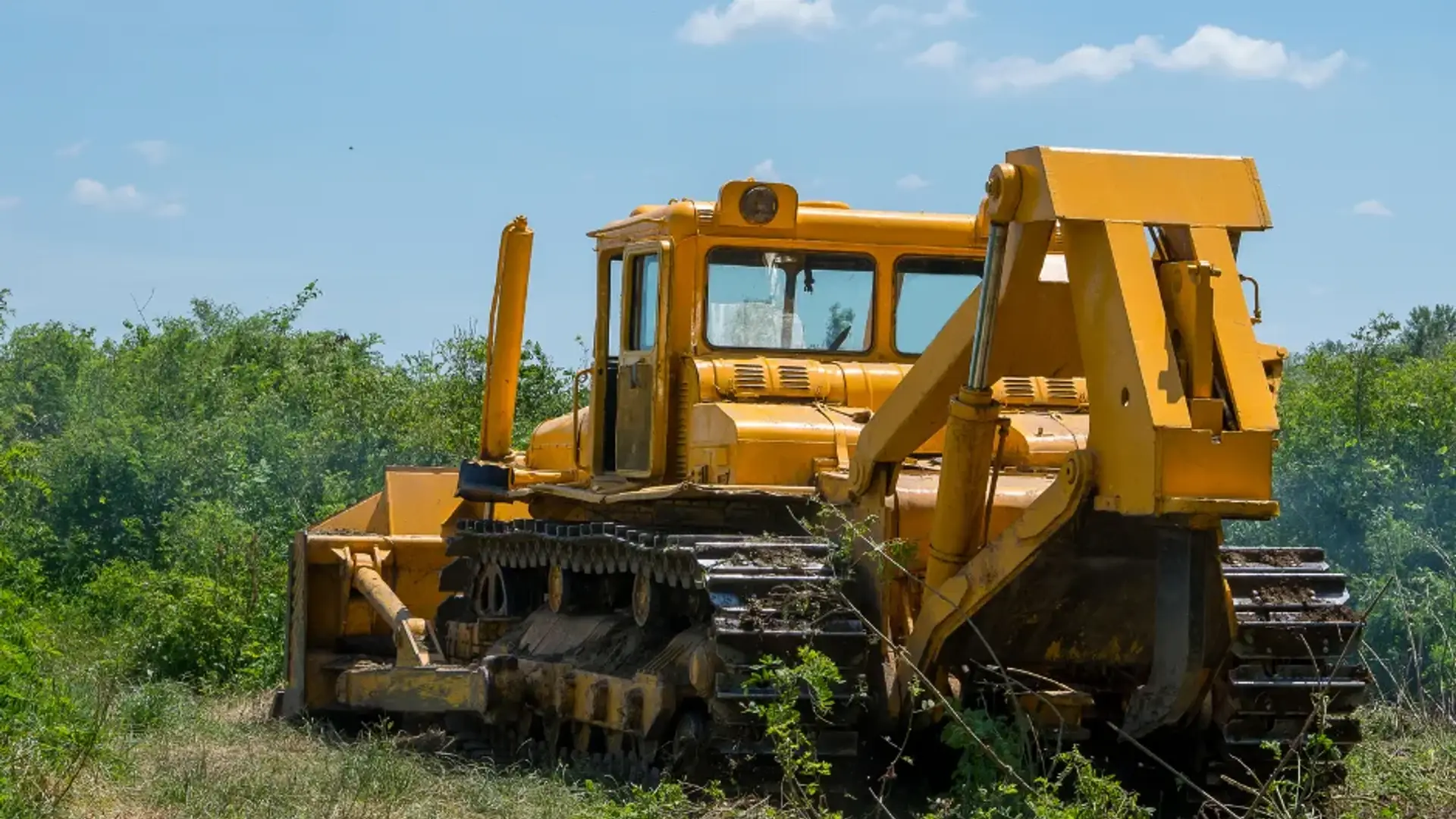
What is forestry mulching?
Forestry mulching uses specialized heavy machinery with a rotary drum or disc to shred vegetation in one pass. Unlike traditional methods, it eliminates the need to cut, pile, haul, or burn biomass by processing brush, saplings, and small trees directly on-site.
Benefits of In-Place Processing
What happens to the waste: The machine grinds woody material into a fine layer of organic mulch left on the forest floor. This decomposes naturally, insulating the soil to retain moisture and prevent erosion while reducing flammable biomass.
Why it helps in California: For properties in wildland-urban interface areas, this method efficiently manages:
- Dense understory growth
- Invasive species like Scotch broom
- Overgrown chaparral
Determining Suitability
Why a site assessment matters: Because California’s topography varies from coastal slopes to foothills, every property is unique. A local professional must evaluate vegetation type, slope steepness, and soil conditions.
How to get started: Use Fire Ready California to connect with local experts who provide individual site assessments. These professionals ensure that your specific land conditions align with the feasibility of forestry mulching, helping you address fuel accumulation before the dry season.
Potential advantages
Forestry mulching is a versatile tool for California landowners looking to reclaim land and reduce wildfire risk. Its ability to navigate rugged, uneven terrain makes it ideal for many different property types.
Common Applications
What can it do:
- Create defensible space by thinning ladder fuels and dense brush.
- Improve visibility and accessibility for wildfire suppression teams.
- Maintain fire roads and perimeter trails by clearing encroaching brambles or manzanita.
- Clear invasive, flammable plant species common on mountain properties.
- Prepare sites for fence lines or woodland health improvements without stripping topsoil.
Efficiency and Planning
Why it is a preferred solution: It avoids the intensive labor of hauling brush and the regulatory complications or smoke associated with pile burning.
Next steps: Success depends on the specific vegetation profile of your land. Connect with a local contractor through Fire Ready California to have an expert review your project—whether it is a small residential lot or large acreage—to confirm the vegetation density matches their equipment's operational limits.
When another method may be needed
While efficient, forestry mulching is not a one-size-fits-all solution for every California landscape. Certain conditions require alternative methods or manual labor to avoid damage or safety issues.
When Alternatives Are Necessary
Conditions to consider:
- Extremely steep slopes may pose safety risks or cause significant soil disturbance.
- Rocky terrain or thin, sensitive topsoil can damage equipment or harm the ecosystem.
- Protected plant species, riparian zones, or archaeological sites often require hand-work or buffer zones.
- If your goal is deep-earth excavation or total stump removal, a mulcher is not the right tool.
Planning for Success
Professional assessment is key: If your trees are too large for a mulcher’s capacity, you may need traditional tree removal or mechanical thinning first. Because regulations regarding native vegetation vary by city and county, an on-site consultation with an independent professional is essential. They will examine your property’s soil, topography, and plant life to determine the most effective and responsible path forward.
Equipment and access considerations
The success of your project depends on selecting the right equipment for your specific site. Contractors use various machines, such as tracked carriers for low ground pressure or skid steers for tighter maneuverability.
Factors Influencing Equipment Choice
What to consider regarding access:
- Equipment is delivered via trailers, so the operator needs space to maneuver and turn around.
- Narrow gates, steep driveways, or low-hanging branches can limit the size of machinery used.
- Soil conditions, such as saturation or loose sand, impact the mobility of heavy equipment.
Coordinating with Professionals
Why talk to your contractor: Discuss these access constraints during an initial on-site assessment. A professional will evaluate entry points, turning radii, and soil stability to ensure safety.
How to find help: Use Fire Ready California to connect with local experts familiar with the unique access challenges of California’s mountain and rural landscapes. A transparent conversation about your property's specific physical limits will prevent delays and ensure a smooth project execution.
Frequently Asked Questions
Common questions about forestry mulching and how our referral service works.
About This Service
Can mulching handle thick trees or just brush?
Process & What to Expect
Will forestry mulching remove all the stumps on my property?
How close can the equipment get to my house?
Timing & Scheduling
What is the best time of year for forestry mulching in California?
Property, Safety & Compliance
Can mulching be done on sloped land?
Do I need a permit to have my property mulched?
Is the mulch left behind harmful to my soil?
Does this work count as official fire-safe compliance?
General Questions
How much does the clearing work cost?
Does Clear Land Connect perform the clearing work?
Is there a charge to submit a project request?
Do I need to know which service I need?
Will I receive an instant price quote?
Can you guarantee a provider is available in my area?
Do I have to accept the estimate?
Can Clear Land Connect confirm that my property is compliant?
Can I provide photos of my property?
What if I have a deadline?
How do I update or cancel a request?
Available in these California counties
Request this service for properties in our active service areas. A local professional serving your county may contact you to discuss the project and provide an estimate.
Featured California Service Areas
Forestry Mulching professionals serving these California communities.
Related services
Depending on the property, a combination of services may be the most effective approach.